
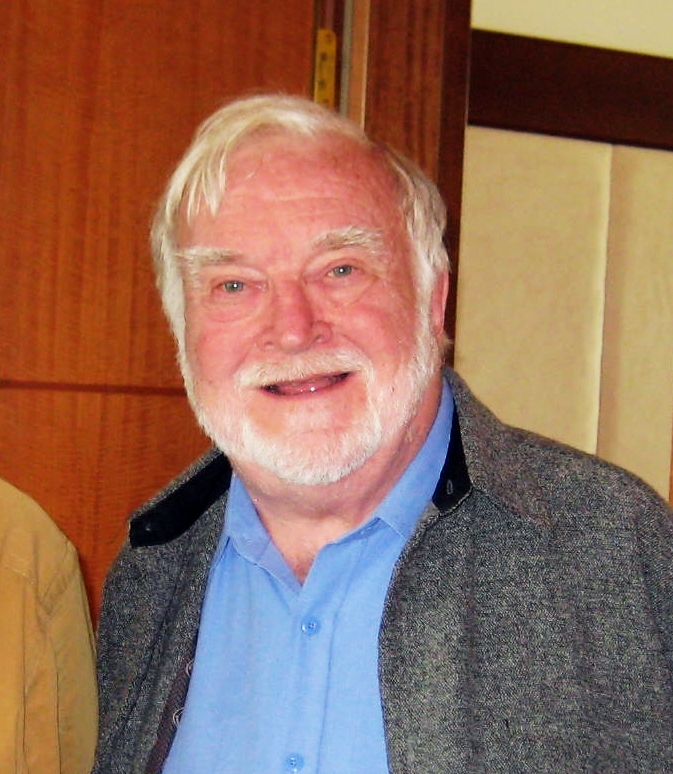
Mihaly Csikszentmihalyi
The psychological architect behind the game's immersive flow state.

Ehirsh · Public domain
Mihaly Csikszentmihalyi was a renowned psychologist whose concept of 'Flow' became the foundational design philosophy for Thatgamecompany's Flower. While not an in-game character, his academic work on optimal experience and immersion directly shaped the game's mechanics and emotional goals.
- Role
- Theoretical Inspiration
- Concept
- Flow Theory
- Influence On
- Thatgamecompany Design Philosophy
- Field
- Positive Psychology
- Nationality
- Hungarian-American
- First Cited
- Development of Flow: Free Fall
Lore & Background
Csikszentmihalyi's research defined 'Flow' as a mental state of operation where a person is fully immersed in an activity. Jenova Chen, creative director of Flower, sought to translate this academic theory into interactive gameplay without traditional goals or failure states. The game's mechanics were engineered to induce this specific psychological condition. By removing obstacles and focusing on fluid movement through wind currents, the developers aimed to create a seamless loop of action and awareness that mirrored Csikszentmihalyi's criteria for optimal experience.
In Their Own Story
The petals drift upward, caught in an invisible current. There is no score to keep, only the sensation of motion itself. The player becomes one with the wind, moving effortlessly through valleys of green and gold. In this silence, the boundary between controller and consciousness dissolves, achieving the state he described.
Reader's Guide
The design team prioritized emotional resonance over mechanical challenge, drawing heavily from Csikszentmihalyi's Flow theory to structure player engagement. Interviews with Jenova Chen reveal that early prototypes focused on frustration-free interaction to maintain immersion. Technical challenges included simulating realistic wind physics that felt responsive rather than chaotic. The team developed custom fluid dynamics systems to ensure the petals moved organically, supporting the psychological goal of effortless control. This approach influenced subsequent titles in the 'art game' genre, shifting focus from difficulty curves to emotional arcs. Flower's success demonstrated that games could function as interactive art pieces designed specifically to induce meditative states.
Did You Know?
- Jenova Chen's doctoral thesis explored the intersection of Flow theory and video games.
- Flower was designed to be played without a controller, using motion controls for immersion.
- The concept of Flow remains central to Thatgamecompany's design philosophy.
Gallery

Frequently Asked Questions
Who was Mihaly Csikszentmihalyi?
He was a Hungarian-American psychologist renowned for developing the concept of Flow within positive psychology. His academic theories served as the foundational inspiration behind Thatgamecompany's design philosophy for Flower.
What role did he play in the game?
Mihaly is not an actual character or entity found inside the game world itself. Instead, his research on optimal experience directly shaped the mechanics and emotional goals of the title.
How does Flow Theory connect to Flower's gameplay?
The developers utilized his psychological framework to create a seamless loop where players feel fully absorbed in controlling the wind. This approach prioritized immersion over traditional challenges or narrative exposition.
Why is he important to the production history?
His work provided the theoretical backbone for the team's goal of creating interactive art that evokes specific emotional states. The entire project was built around replicating the immersive conditions described in his studies.
Does Mihaly appear as a character in the story?
No, he does not exist as a playable avatar or NPC within the game's narrative. His legacy remains purely intellectual, influencing how the experience feels rather than what it depicts visually.
More in Production & Legacy
Elsewhere in the Flower universe
Spotted an error? Know more?
This is a living reference — every entry is fact-audited, and reader corrections feed straight into our audit queue. Suggest an edit · See this site's audit record