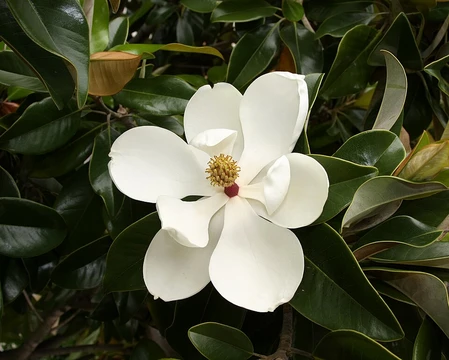
2009 PS Move launch title
A single breath of wind can paint an entire world back to life.

Flower is a 2009 action-adventure game developed by thatgamecompany for the PlayStation 3, released as a launch title for the PlayStation Move motion controller. The game casts the player as a small, wind-blown flower making its way from a smog-choked city through a vibrant meadow and up a pristine mountain, using the PS Move controller to blow air and restore color to a desaturated landscape.
As a PS Move launch title, Flower was designed from the ground up around the controller's motion-sensing capabilities, translating the physical act of blowing into a core gameplay mechanic. The experience is wordless, meditative, and deliberately short, continuing thatgamecompany's tradition of contemplative, single-player design established with Flow and Cloud.
- Developer
- thatgamecompany
- Platform
- PlayStation 3
- Release year
- 2009
- Controller
- PlayStation Move
- Genre
- Action-adventure / Puzzle
- Players
- 1
- Creative director
- Jenova Chen
Lore & Background
In Flower's world, a small flower has been torn from its garden atop a distant mountain and cast into a gray, polluted city below. The landscape is drained of color—buildings are monochrome, the sky is a flat wash of ash, and the meadow beyond the city is a ghost of its former vibrancy. The player's only agency is the wind: a gentle exhalation channeled through the PS Move controller that carries petals, lifts the flower along its path, and slowly re-saturates the world in sweeping strokes of green, gold, and blue.
Partway through the journey, a small bird joins the flower as a companion, perching on its stem and guiding its direction. The two move together through the meadow, over rolling hills, and past a small village, each interaction with the environment—bending grass, scattering dandelion seeds, ruffling the bird's feathers—reinforcing the sense of a living, breathing ecosystem being gently coaxed back to health.
The game's narrative is entirely environmental. There is no dialogue, no text, no objective list. The story is told through the progression of the palette, the density of the foliage, and the increasing confidence of the wind. By the time the flower reaches the summit, the world is lush and saturated, and the act of returning to the garden feels less like completing a task and more like coming home.
In Their Own Story
The city breathes out gray. You are a stem no taller than a thumb, pressed against a cracked sidewalk, and the air tastes of nothing. You tilt your head—your whole body, really—and the world shudders. A single petal detaches, spirals up, and where it lands, a blade of grass remembers what green means. You follow it. You follow it further. The meadow unspools ahead, a watercolor bleeding outward from your passing. Somewhere above, a small bird watches, tilts its head, and decides to come along. The mountain is patient. The mountain has always been patient. You will get there, one breath at a time.
Reader's Guide
Flower was conceived during the PlayStation Move's development window and became one of the platform's defining launch experiences. thatgamecompany's team, led by creative director Jenova Chen, approached the project with the same philosophy that guided Flow and Cloud: strip away text, menus, and traditional objectives, and let the player discover the world through physical interaction.
The central technical challenge was translating the PS Move's six-axis motion data into a natural, forgiving wind mechanic. Early prototypes made the blowing feel mechanical and imprecise; the team iterated extensively on the sensitivity curve, the particle response, and the way petals carried momentum so that a casual tilt of the controller produced a satisfying gust rather than a twitchy spray. The watercolor rendering pipeline was also a significant undertaking, requiring custom shaders to simulate pigment bleeding and layered transparency across the meadow geometry.
In development interviews, the team emphasized that Flower was designed to be completable in a single sitting—roughly thirty to forty minutes—so that the PS Move experience could be sampled without a long time commitment. The absence of any on-screen text or HUD was a deliberate accessibility choice, ensuring the game could be picked up by players of any age or language.
Flower's influence on subsequent motion-controlled titles was notable in its restraint. Rather than mapping complex button inputs to the controller, it demonstrated that a single, well-tuned physical gesture could carry an entire game's identity. That design philosophy echoed in later thatgamecompany work and in a broader wave of short, contemplative PS Move experiences that prioritized feeling over mechanics.
Did You Know?
- Flower contains zero on-screen text, dialogue, or traditional HUD elements; the entire narrative is conveyed through environmental color and the progression of the landscape.
- The game was designed to be completable in roughly thirty to forty minutes, making it one of the shorter PS Move launch titles and an easy entry point for first-time motion-controller users.
- A small bird appears as a companion partway through the journey, perching on the flower's stem and subtly guiding its direction without any explicit instruction to the player.
- Flower was developed by thatgamecompany, the same independent studio behind Flow (2006) and Cloud (2005), both of which established the studio's signature of wordless, single-player contemplative design.
More in Production & Legacy
Elsewhere in the Flower universe
Spotted an error? Know more?
This is a living reference — every entry is fact-audited, and reader corrections feed straight into our audit queue. Suggest an edit · See this site's audit record