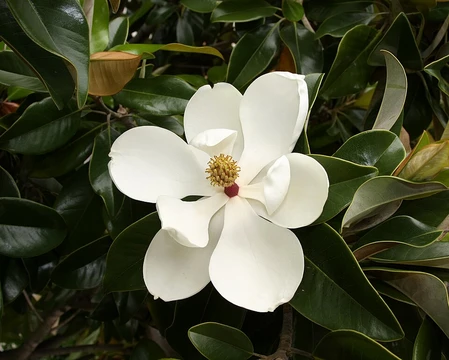
Art game genre
A thirty-minute journey through wind, petal, and silence that redefined what a video game could feel like.

Flower is a 2009 3D platformer developed by thatgamecompany and published by Sony Computer Entertainment for the PlayStation 3. Designed by Jenova Chen and Kellee Santiago, the game places the player as a small flower carried by the wind through three distinct environments—a polluted city, a barren desert, and a lush forest—collecting petals and helping other flowers along the way. It contains no combat, no score, and no death state; the entire experience is structured around a single, continuous emotional arc lasting roughly thirty minutes.
Flower is widely regarded as a foundational title of the 'art game' genre, a movement that prioritizes emotional resonance, aesthetic design, and short, focused experiences over traditional mechanical complexity. Together with contemporaries like Braid and later Journey, it helped establish a viable commercial and critical space for games that function closer to interactive film or poetry than to conventional software.
- Developer
- thatgamecompany
- Designers
- Jenova Chen, Kellee Santiago
- Publisher
- Sony Computer Entertainment
- Platform
- PlayStation 3
- Release year
- 2009
- Genre
- 3D platformer / art game
- Approximate playtime
- ~30 minutes
Lore & Background
In the world of Flower, the player's flower begins in a grey, smog-choked city where the air is thick and the wind barely stirs. As the flower is blown forward, it gathers petals that brighten its form and, with each new petal, the world around it subtly recovers—graffiti fades, the sky lightens, the wind strengthens. This first act is one of quiet resistance, of small life persisting in a place that has forgotten green.
The desert that follows strips the experience to its barest elements: vast, silent dunes, a single winding path, and the wind as the only companion. Here the game asks the player to simply move, to feel the weight of emptiness and the small triumph of each petal collected. The final act, the forest, is a release—waterfalls, birds, a fullness of color and motion that the earlier sections only hinted at. The flower is no longer fighting the environment; it is part of it.
The game's emotional architecture is deliberately linear and unrepeatable in the traditional sense. There is no save file, no branching, no second chance. The experience is meant to be felt once, in a single sitting, the way one might watch a short film or read a poem. That constraint is central to its identity as an art game: the medium is the feeling, not the challenge.
In Their Own Story
The wind picks you up at the edge of a grey overpass. Below, the city sprawls in muted tones, exhaust curling between towers like slow smoke. You are small. You are a single stem with a few pale petals, and the air is all you have. You drift forward, and a petal breaks loose from a cracked planter box and spirals toward you. You take it. The grey at the edges of the screen softens by a degree. You drift further. Another petal. Another. The sky, which had been the color of wet concrete, begins to show a faint blue at its highest point. You do not see your hands. You do not see a score. You only feel the wind shift, warm now, and the city behind you is already receding into a shape you will not name. Ahead, the desert is waiting, and it is very, very quiet.
Reader's Guide
Thatgamecompany's internal philosophy, articulated by co-founders Jenova Chen and Kellee Santiago, centered on building games that produced a specific, identifiable emotional state in the player rather than a stream of mechanical challenges. Flower was conceived as a proof of concept for this approach: a single, unbroken sequence of roughly thirty minutes with no pause menu, no inventory, and no failure state.
The wind-driven movement system was a significant technical undertaking. The team built a custom particle and force simulation so that the flower responded to the player's directional input as though it were a physical object in a fluid medium. The goal was to make the player feel weightless and carried, never in direct control of the flower's position. This contrast with the precise, frame-perfect control expected in platformers was intentional and, by the team's later accounts, the hardest design problem to solve.
The three-act structure (city, desert, forest) was designed as an emotional progression from suppression to emptiness to abundance. Each environment was art-directed to strip away or add visual complexity in direct proportion to the player's petal count, making the world's visual state a direct reflection of the player's progress without any numerical feedback.
Flower's influence on subsequent art games is well documented in the broader thatgamecompany catalog. Journey (2012), developed by the same studio, expanded the same emotional-arc philosophy to a multiplayer context and a longer duration. The game also contributed to the critical vocabulary and commercial expectations for short-form, narrative-light indie titles in the years that followed, helping normalize the idea that a game could be judged primarily on the feeling it left rather than the systems it contained.
Did You Know?
- Flower has no death mechanic, no score counter, and no pause function—the player simply continues drifting until the sequence ends.
- The game was designed to be experienced in a single sitting of approximately thirty minutes, a duration chosen to mirror the arc of a short film.
- The visual state of the world (color, vegetation, sky) changes in direct response to how many petals the player has collected, with no numerical indicator shown.
- Flower helped establish the 'art game' as a recognized critical and commercial category, paving the way for titles like Journey, Braid, and Limbo to be discussed in the same frame.
More in Production & Legacy
Elsewhere in the Flower universe
Spotted an error? Know more?
This is a living reference — every entry is fact-audited, and reader corrections feed straight into our audit queue. Suggest an edit · See this site's audit record