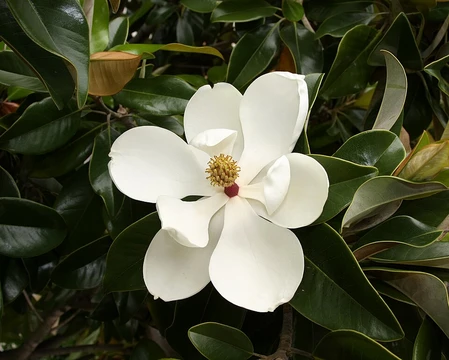
Wind protagonist
One small petal, carried by the breath of the world, gathering what was lost.

The Wind protagonist of Flower is the player-controlled petal — a small, luminous fragment of a great flower that has been torn loose and set adrift by the wind. It is the sole character the player inhabits throughout the experience, carried not by direct locomotion but by gusts, thermals, and updrafts that the player subtly steers. The petal begins as a single, fragile sliver and grows in size and color as it gathers other lost petals scattered across a dusty, lifeless landscape, gradually restoring vibrancy to the world it passes through.
Within the Flower franchise, this wind-borne petal represents thatgamecompany's design philosophy at its purest: a minimal, unnamed protagonist whose identity is defined entirely by motion, breath, and the act of gathering. There is no dialogue, no HUD, no objective text — only the feeling of being carried and the quiet satisfaction of making a grey world bloom.
- Character
- Wind-borne petal (unnamed player avatar)
- Franchise
- Flower
- Developer
- thatgamecompany
- Designers
- Jen and Kellee Evenson
- Year released
- 2009
- Platform
- PlayStation 3 (PSN)
- Role
- Player-controlled protagonist; grows by collecting petals
Lore & Background
In the world of Flower, a great flower once stood at the heart of a verdant land, its petals a living canopy. A violent wind tore one petal free and hurled it into a vast, dusty expanse where color and life had long since faded. This is the petal the player becomes — a single curl of soft, iridescent material, tumbling end over end in a gale, too small to fight the current, too light to fall.
As the petal rides the wind through canyons of grey stone and fields of withered grass, it encounters other lost petals, fragments of the same great flower scattered and half-buried in the dust. Each one it collects fuses to its form, adding layers of color, weight, and presence. The landscape itself responds: where the petal passes, the dust lifts, the stones flush with faint green, and the air thickens with the smell of rain that has not yet come.
The petal has no name, no voice, no face. It is pure motion and accumulation — a living reminder that even the smallest fragment of something whole can carry enough of the original to rekindle what was lost. The wind is not an obstacle to the petal; it is the petal's body, its means of being, the only way it knows how to exist.
In Their Own Story
The gust hits from the south, low and warm, and the petal lifts off the cracked earth in a slow spiral. For three seconds it is still — just a curl of pale gold against the grey — and then the current catches its underside and the world tilts. It rolls, tumbles, catches a thermal that rises off a dry riverbed, and surges upward. Below, a field of dead grass parts in a wide wake. Ahead, half-buried in silt, another petal glints: a sliver of deep violet, barely a fingernail's width. The petal banks left, drops, and the violet fragment peels free of the dirt, spiraling up to meet it. They fuse with a soft, almost silent click. The petal is heavier now, richer, and the dust behind it is already turning the faintest shade of green. The wind picks up again. It does not ask where it is going. It simply goes.
Reader's Guide
The Wind protagonist's design traces back to Jen and Kellee Evenson's stated goal of creating a game that felt less like a product and more like a single, sustained breath. In early development discussions, the team described the petal as a way to strip the player down to the most elemental interaction possible: being carried, and choosing where to go within the carry.
The wind mechanic presented a notable technical and design challenge. Rather than traditional left-right movement, the petal's velocity is governed by a simulated airflow field. The team worked to make the wind feel organic — gusty, directional, occasionally turbulent — so that the player experiences the air as a physical medium rather than an invisible force. Steering is subtle: the player nudges the petal's angle, and the wind does the rest.
The petal's growth system was designed to be purely visual and emotional. There are no numbers, no inventory. The petal simply becomes larger, more layered, more colorful. This restraint was intentional, consistent with thatgamecompany's broader philosophy of removing competitive scaffolding in favor of a meditative, shared experience.
Flower's influence on subsequent titles in the genre is visible in the emphasis on wind, drift, and passive gathering as core verbs. The petal established a template for protagonists whose identity is defined by a single environmental force rather than by combat or progression systems.
Did You Know?
- The petal has no name, no dialogue, and no visual face anywhere in the game; the player identifies with it purely through motion and growth.
- The wind is not a background effect but the primary controller of the petal's movement — the player steers angle, and the air provides all velocity.
- The petal's growth is entirely cosmetic and emotional; there are no stats, counters, or inventory screens tracking how many petals have been collected.
- Flower was designed as a short, single-sitting experience, and the petal's journey from a single sliver to a full, layered bloom is meant to be completed in a brief, unbroken flow.
More in Production & Legacy
Elsewhere in the Flower universe
Spotted an error? Know more?
This is a living reference — every entry is fact-audited, and reader corrections feed straight into our audit queue. Suggest an edit · See this site's audit record