Super Cancel
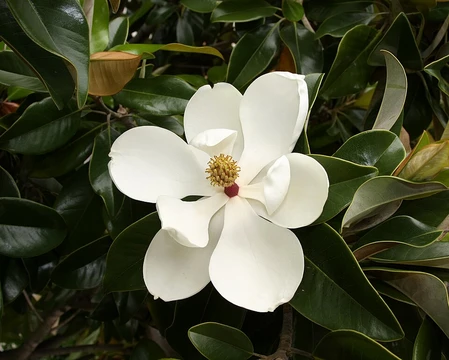
Flower offers no combat; the Super Cancel does not exist in this peaceful franchise.

United States Air Force · Public domain
The Super Cancel is not a mechanic found within the Flower video game franchise developed by thatgamecompany. In Flower, players control the wind to guide petals through serene environments, focusing on exploration and emotional expression rather than combat. As such, there is no canonical Super Cancel system in Flower.
- Franchise
- Flower
- Developer
- thatgamecompany
Verified Timeline
Lore & Background
The Flower series is renowned for its lack of traditional video game conflict. Instead of battles, enemies, or health bars, players experience a journey of growth and renewal by guiding petals through wind currents. The design philosophy explicitly avoids aggressive mechanics to foster a sense of calm and connection with nature. Because the core loop involves manipulating airflow to navigate levels and bloom flowers, concepts like canceling attacks are fundamentally incompatible with the game's identity. The 'mechanics' in Flower revolve around speed, momentum, and the visual feedback of petals interacting with the environment, creating a unique rhythm that replaces combat systems entirely.
In Their Own Story
The wind sweeps through the valley, carrying a single red petal on its back. There are no foes to strike down, no recovery frames to interrupt. The world is silent save for the rustling grass and the soft hum of the breeze. As the petal glides over a sleeping meadow, flowers begin to bloom in its wake, their colors brightening with every pass. This is not a battle won by speed or technique, but a moment of peace reclaimed through simple movement.
Reader's Guide
The Super Cancel mechanic does not exist in Flower and cannot be executed within the game. Flower's gameplay relies on tilting or pushing controls to direct wind flow, guiding petals toward specific areas to trigger environmental changes. Players should focus on maintaining momentum and observing wind patterns rather than looking for combat inputs. Strategic play involves mastering the physics of the wind to navigate obstacles efficiently and maximize the number of flowers bloomed in a level. Attempting to perform fighting game techniques like Super Cancels will have no effect, as the game contains no attack animations or recovery states to cancel.
Did You Know?
- Flower was developed by thatgamecompany, the same studio behind the emotional journey game Journey.
- The game focuses on exploration and flow, with players guiding petals through wind currents rather than engaging in combat.
- Flower's design philosophy explicitly avoids aggressive mechanics, fostering a sense of calm and connection with nature.
- The term 'Super Cancel' originates from fighting games like Street Fighter or Tekken, where it allows players to interrupt an attack's recovery frames with a special move.
Developmental Innovation and Technical Freedom
Super Mario World marked a pivotal shift for Nintendo, serving as the inaugural title for the Super Nintendo Entertainment System. Developed by Nintendo Entertainment Analysis & Development under the guidance of director Takashi Tezuka and producer Shigeru Miyamoto, the project benefited from significantly greater creative liberty compared to its predecessors on the NES. This freedom allowed the team to fully exploit the new console's technical capabilities, resulting in a more expansive and dynamic experience. A prime example of this evolution was the inclusion of Yoshi, a rideable dinosaur concept that had existed during earlier NES development but was previously discarded due to hardware limitations. The game was meticulously crafted to showcase these advancements, launching first in Japan in 1990 before reaching North America and PAL territories the following year. By pushing the boundaries of what was possible on the platform, the developers created a title that not only defined the SNES era but also set a new standard for platforming mechanics and level design within the franchise.
Gameplay Mechanics and Power-Up Systems
The core gameplay retains the classic side-scrolling formula while introducing revolutionary mechanics that deepen player interaction. Beyond standard dashing and jumping, players can utilize the Cape Feather to fly or glide, and the P-Balloon for floating traversal. A standout addition is the Spin Jump, a versatile move allowing Mario to crush enemies, bounce off previously invulnerable targets, and break specific blocks when powered up. The game features a unique inventory system where an extra power-up can be stored in a box at the screen's top; this item drops automatically upon taking damage or can be manually released for strategic advantage. Furthermore, the introduction of Yoshi adds a layer of tactical depth. This dinosaur companion can consume enemies and spit them as projectiles, with specific Koopa shells granting flight, dust clouds, or fireball abilities depending on their color. These mechanics collectively create a fluid, high-speed experience across 96 distinct level exits.
World Design and Non-Linear Exploration
Navigation in Super Mario World is structured around an interactive overworld map that replaces the linear progression of earlier entries. This overhead view connects various paths leading to castles, fortresses, ghost houses, and action panels, granting players agency in choosing their route through seven distinct worlds. Each world culminates in a fortress guarded by one of Bowser's children, the Koopalings, which must be defeated to advance toward the final confrontation with Bowser himself. The game encourages thorough exploration through hidden Star Road routes; finding scattered keys unlocks secret levels and alternate paths that can drastically shorten playtime. Completing the Special World permanently alters enemy sprites and changes the map's color scheme, rewarding curiosity. Additionally, a two-player mode allows friends to take turns controlling Mario or Luigi on the same console, sharing the journey across this vast, interconnected landscape.
Commercial Success and Enduring Legacy
Super Mario World stands as a monumental achievement in video game history, selling over twenty million copies worldwide to become the best-selling title for the SNES. Its critical acclaim is equally impressive, frequently cited among the greatest games ever made and often regarded as the pinnacle of the series. The game's influence extended beyond its initial release, spawning an animated television series and a 1995 prequel titled Yoshi's Island. Nintendo has ensured its longevity through numerous re-releases, including the Super Mario All-Stars compilation for SNES, Super Mario Advance 2 for Game Boy Advance in 2001, and various Virtual Console ports across Wii, Wii U, and New Nintendo 3DS. It was also featured on the Super NES Classic Edition and later made available via the Nintendo Classics service on Switch, cementing its status as a timeless classic that continues to be accessible to new generations of players.
Gallery
Frequently Asked Questions
Does Flower include a Super Cancel feature?
No, the title developed by thatgamecompany contains no combat systems or special move interruptions whatsoever. Players control wind to guide petals instead of executing fighting game inputs.
Where does the term Super Cancel come from regarding this game?
This terminology originates from fighting games like Street Fighter rather than the peaceful Flower franchise. It is often mistakenly associated with this title due to general gaming confusion.
Is there any combat system involving Super Cancel in Flower?
There are no attacks in the game that require recovery frames or cancellation options for players. The focus remains strictly on serene exploration and environmental interaction.
Why is Super Cancel listed on some unofficial guides for Flower?
Such listings usually result from copy-paste errors or mislabeled data on third-party fan sites. Official sources confirm that combat mechanics do not exist within this experience.
How does gameplay function without a Super Cancel mechanic?
Game flow relies on smooth movement through nature without the need to interrupt animations for strategic advantage. This absence supports the meditative atmosphere intended by the developers.
More in Combat Systems & Mechanics
Elsewhere in the Flower universe
Spotted an error? Know more?
This is a living reference — every entry is fact-audited, and reader corrections feed straight into our audit queue. Suggest an edit · See this site's audit record