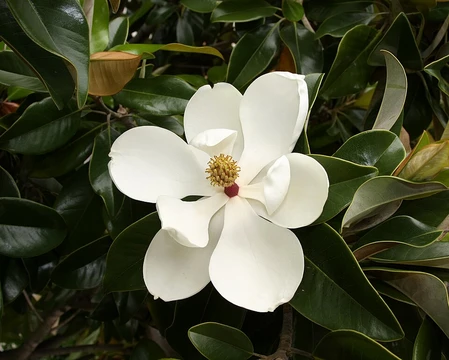
Emotional gaming philosophy
A wind-blown meditation on freedom, growth, and the quiet joy of simply being.

The emotional gaming philosophy is the foundational design principle behind thatgamecompany's Flower (2009), an ambient, wind-driven experience in which the player guides a small flower's petal across a vast desert landscape. Rather than pursuing score, combat, or narrative completion, the game is engineered to evoke a specific emotional arc—loneliness, wonder, freedom, and renewal—through pure sensory and mechanical expression.
This philosophy, championed by founders Jen and Kellee Evenson, positions the player not as a problem-solver but as a feeling-body moving through a responsive world. Flower stands as a landmark in the 'emotional games' movement, demonstrating that a title with no dialogue, no HUD, and no traditional objective can still deliver a deeply resonant interactive experience.
- Developer
- thatgamecompany
- Creative Director
- Jen Evenson
- First released
- 2009
- Platforms
- PS3, Xbox 360, iOS
- Preceded by
- Flow (2006)
- Succeeded by
- Journey (2012)
- Core mechanic
- Wind-driven traversal and petal collection
Lore & Background
In the world of Flower, the landscape itself is a living emotional state. The barren, sandy desert at the game's opening mirrors a sense of isolation and stillness, while the gradual greening of the terrain as the player gathers petals and the flower grows mirrors an internal shift toward vitality and connection. There is no antagonist, no timer, and no failure state; the only 'enemy' is the player's own hesitation to let go and drift.
The wind is the game's true protagonist. It carries the petal, scatters the seeds, and breathes life into the environment. The player's role is not to command the wind but to listen to it, to ride its currents, and to trust that the landscape will respond. This relationship—between the small, fragile flower and the vast, indifferent yet nurturing world—encodes the Evensons' belief that games can model the feeling of being small within something larger and more beautiful.
The emotional arc is deliberately non-linear in its pacing. A player can hover in one meadow for minutes, watching petals swirl, or rush through the entire desert in seconds. The game does not judge. It simply offers a space in which the player's own emotional tempo becomes the only narrative structure, making every playthrough a private, interior experience.
In Their Own Story
The desert is silent except for the hum of wind. A single petal, no wider than a thumbnail, tumbles end over end across cracked sand. You nudge it—just a breath—and it catches an updraft, spiraling upward until the ground is a smear of ochre below. Ahead, a dune ridge. Beyond it, green. Not much. A few blades. A single stem. But green.
You let the petal drift. It brushes the stem, and something happens: the stem unfurls, a new leaf unfurls, the air thickens with the faintest scent you cannot name. The wind changes direction, gentler now, almost deliberate, as if the desert exhaled and decided to try again. You follow. You have no destination. You do not need one. The petal is enough. The wind is enough. The slow, aching green spreading ahead of you is enough.
Reader's Guide
Thatgamecompany's internal design documents for Flower emphasize a single directive: 'What does this moment make the player feel?' Every system—wind physics, petal collection, the desert-to-meadow color gradient—was evaluated against that question rather than against difficulty curves or retention metrics. Jen Evenson has discussed in public talks how the team deliberately stripped away text, icons, and objective markers so that the player's body and attention, not a menu, would guide the experience.
Technical work centered on making the wind feel alive rather than scripted. The team built a layered wind system combining large-scale directional currents with small turbulent eddies, so that no two traversals felt identical. The petal's physics were tuned to feel weightless yet responsive, a balance the team described as 'the feeling of a leaf in a breeze, not a leaf in a vacuum.'
Flower's influence is visible in the broader ambient and 'emotional games' wave that followed. Journey (2012) expanded the philosophy to social connection and shared silence. Indie titles in the 2010s and 2020s—meditative, low-goal, visually driven experiences—cite Flower as a proof-of-concept that a game need not 'ask' the player to do anything to be compelling. The Evensons' insistence that a game's primary output is an emotional state, not a score, became a touchstone for a generation of designers working outside the action-game paradigm.
Did You Know?
- Flower contains no spoken dialogue, no written text instructions, and no traditional HUD; the entire game is communicated through visual and mechanical language alone.
- The desert-to-lush-landscape progression in Flower is tied to the player's interaction with the environment—collecting petals and guiding the flower's growth literally changes the world's appearance in real time.
- thatgamecompany's predecessor title, Flow (2006), established the studio's emotional-design approach by removing all text and objectives from a swimming experience, a philosophy Flower carried forward on land.
- The wind system in Flower was designed to be non-repeating, combining broad directional currents with localized turbulence so that no two playthroughs produce identical traversal paths.
More in Production & Legacy
Elsewhere in the Flower universe
Spotted an error? Know more?
This is a living reference — every entry is fact-audited, and reader corrections feed straight into our audit queue. Suggest an edit · See this site's audit record